
Red dust settles on everything by the second week of a safari — the tent canvas, the boots, the barrel of a rifle leaned against a camp chair. It settles on a knife too, and a knife does not forgive neglect the way a rifle might. Somewhere in your kit is a blade that has skinned more animals than you can count on both hands, and it does not care what country you carried it into. It only cares whether you have looked after it.
A knife is a simple thing. That is its virtue. But simple things still ask something of you, and a good blade of high-carbon steel with a wood handle asks more than a stainless one bought off a shelf. It asks to be dried. It asks to be oiled. It asks, now and then, to be looked at closely, before the day's heat sets in.
The Blade
Carbon steel takes a keener edge than almost anything you can carry into open country, and it holds that edge through the kind of work that would dull a lesser blade before the first game is skinned. This is why the old outfitters carried it, and why we still do. But carbon steel is averse to moisture. Even in the dry season, nights bring dew heavy enough to soak through canvas before the sun clears the tree line, and the wet season needs no introduction at all. Blood, sweat, condensation off a tent wall — all of it sits on the steel and goes to work if you let it.
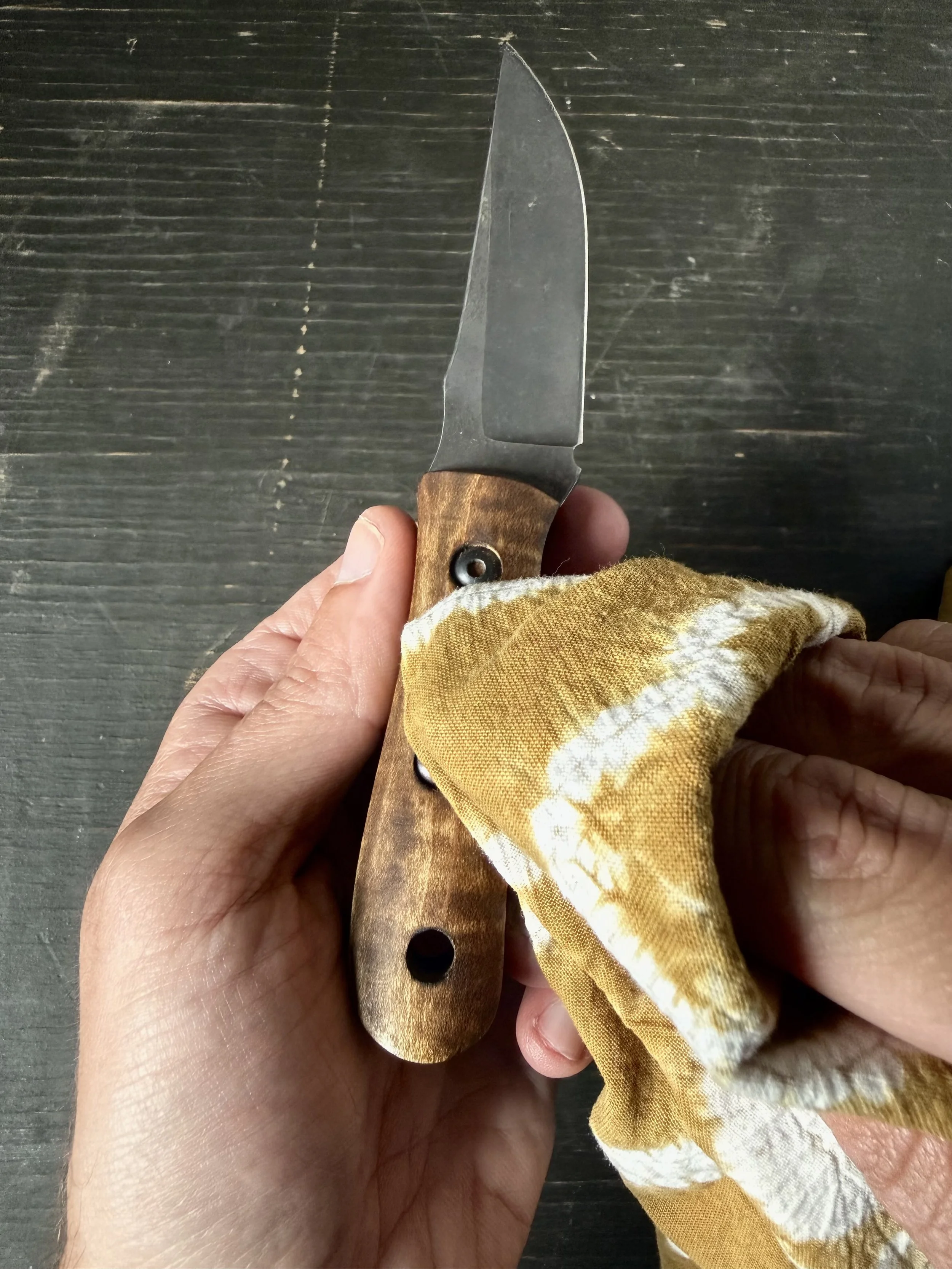
So the rule is simple. Wipe the blade dry after every use. Not "back at camp." Now, with whatever cloth is nearest. Then oil it. A drop of mineral oil, or coconut oil if that's what the cook has to spare, worked thin across the steel is enough. Both are food safe, which matters on a blade you use for skinning in the morning and slicing limes for your drink that evening.
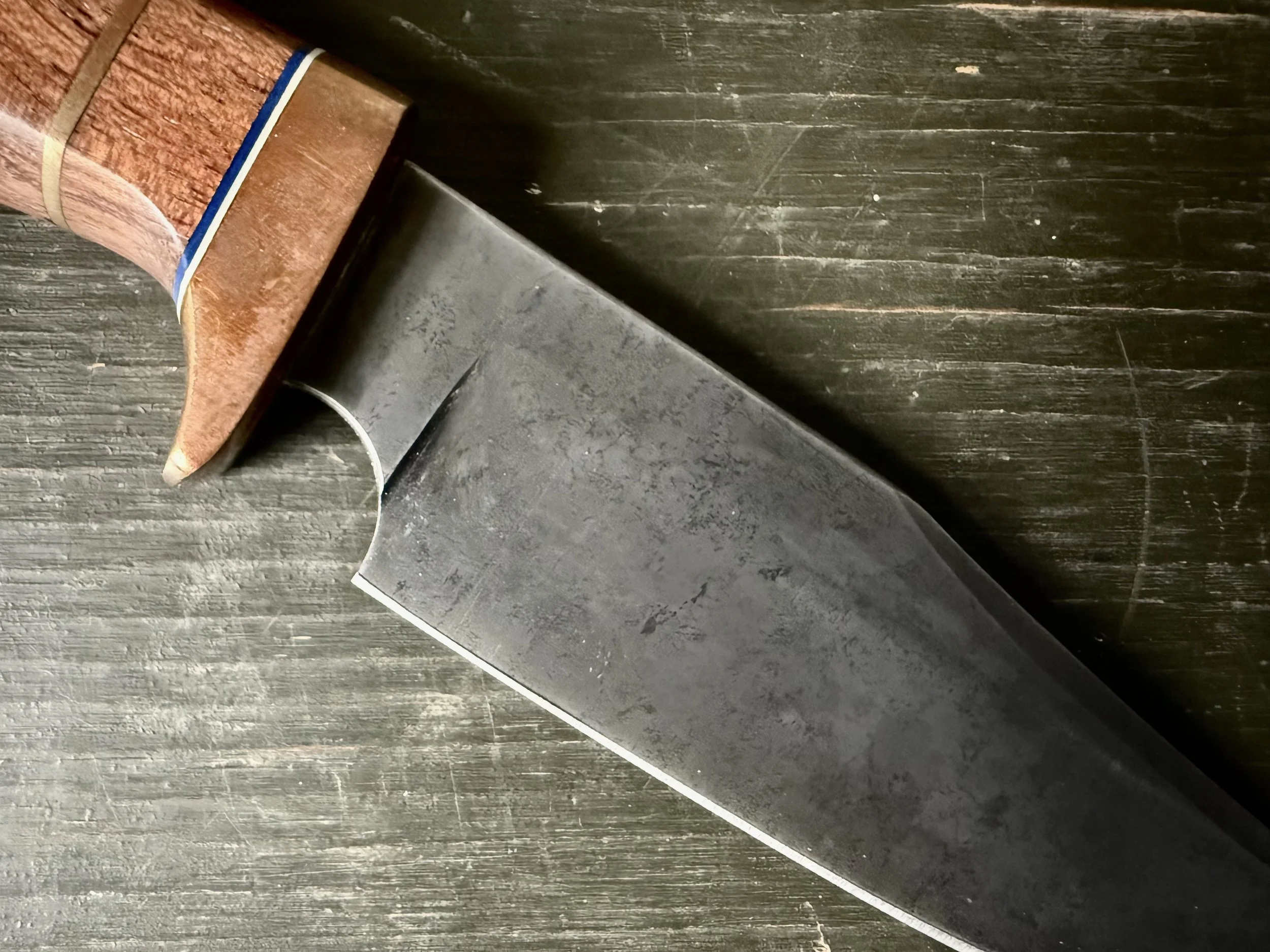
Left alone, carbon steel darkens on its own, taking on a gray or blue-black cast. That is not damage. That is a patina — a thin layer of oxidation the trade calls magnetite — and it protects the steel beneath rather than eating into it. Red, flaking rust is the enemy. Gray patina is the ally. Some outfitters force the patina early with vinegar or a paste of mustard, just to get the protection working before the trip properly begins. Welcome the color. Fight only the rust.
Should rust appear regardless, do not scrub in a temper. Oil the spot, let it sit, then work it gently with fine steel wool. The rust lifts. The steel beneath does not. For a longer trek, or one that runs near salt air on the coast, go further: melt a little wax into the clean, dry blade and let it cure before the knife goes anywhere near its sheath. This builds a barrier the damp has to work through before it reaches the metal, and it will see a blade through a full season without a spot of orange.
And when camp is struck for the night, do not sheath a wet knife. A sheath holds damp against steel far longer than open air does. Let the blade dry uncovered first, even if it rides bare across the top of the pack for an hour.
The Handle
Wood, whatever the species, dries and cracks in the dust and low humidity of open country faster than most men expect. Keep it oiled with the same drop used on the blade, worked into the grain every few days on a long trip. Do not soak it, and do not set it near the fire to speed things along — fast heat checks a handle before the damage is noticed. Let it dry slowly, out of direct sun.
The handle darkens with time, taking on the color of your hands and the ground you've walked. That is not wear. That is history, and no oil will stop it, nor should it try.
The Sheath
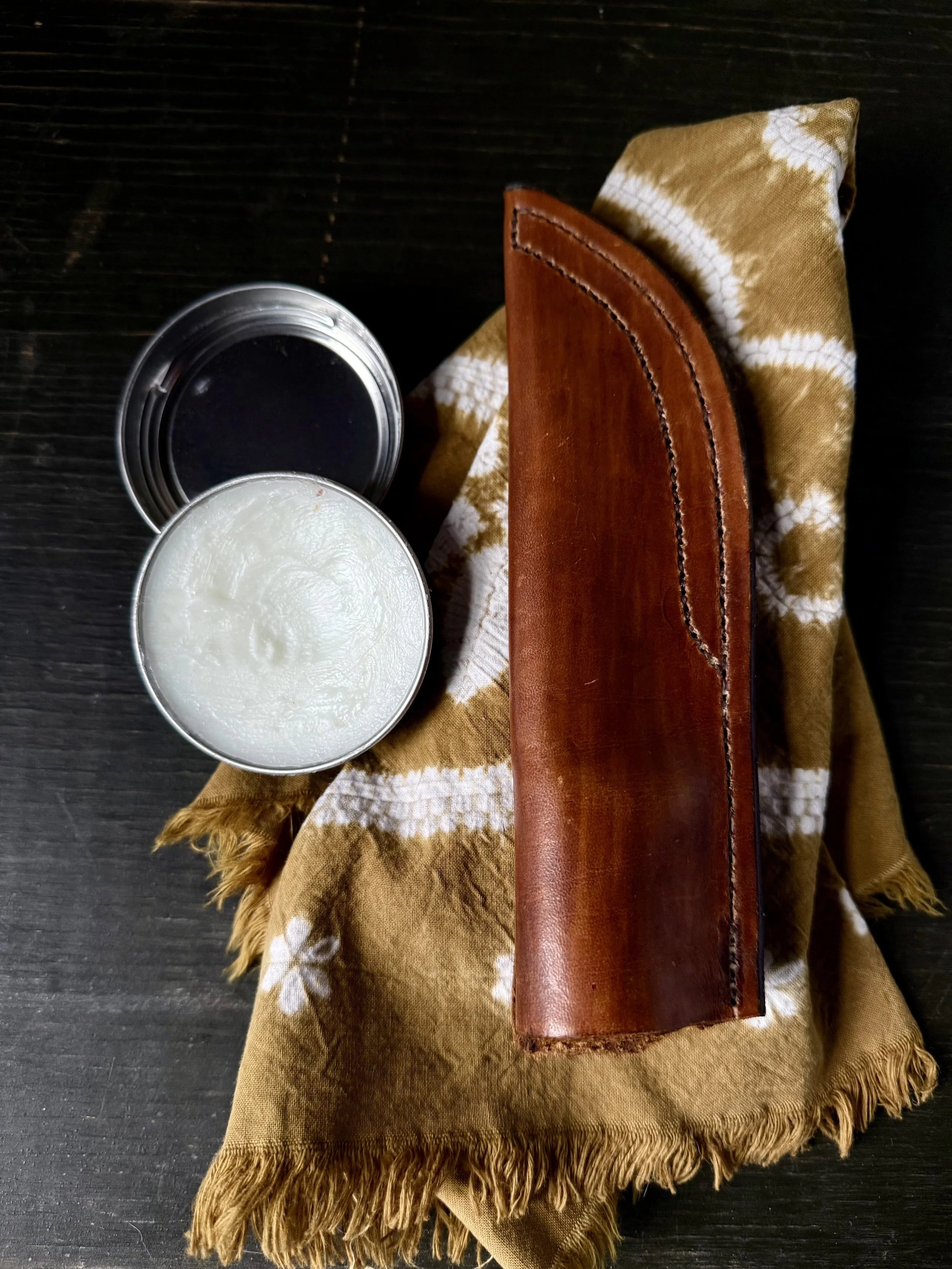
Leather deserves the same attention, and more than most men give it. If a sheath gets soaked in a river crossing or a sudden rain, do not dry it by the fire and do not rush it in direct sun. Stuff it loosely with a dry cloth to hold its shape and let it dry slowly, away from heat. Fast heat pulls the oils straight out of leather and leaves it stiff and prone to cracking at the seams.
Condition it every so often with neatsfoot oil or a proper leather balm, worked in with your fingers in small amounts. Do not overdo it — leather fed too much oil goes soft and loses its shape, and a sheath that won't hold its form protects nothing. Dirt and salt crust lift with a bit of saddle soap and a damp cloth. Dry it. Oil it again, lightly.
The Kit
None of this takes long, and it weighs almost nothing. A small tin of oil, a soft cloth, a scrap of fine steel wool, a pocket stone for the edge, a tin of leather balm. Five minutes at the end of a long day in camp is all it costs.
This is not about babying a tool. It is about understanding what you're carrying. A knife built from good steel, good wood, and good leather will outlast the safari, the season, and likely you, if you let it. It will darken. It will pick up scars of its own. That is not damage. That is a knife doing its job, and you doing yours.
Use it. Dry it. Oil it. Sharpen it when it dulls.
And when the day is done and the story is worth telling, pass it on to someone who will do the same.